A Parkinson's diagnosis changes how you think about money, time, and borders. Suddenly the question isn't just where do I get good care? It's where do I get good care without spending the rest of my retirement on it? That's a fair question, and the honest answer surprises people. Some of the strongest neurology programs in the world sit in countries you might not have considered, and the price gap between them and the U.S. or U.K. is not 10 or 20 percent. It's more like 70 to 80.
This guide walks through the best and cheapest countries for Parkinson's treatment abroad, what each one actually offers, and why so many international patients are now choosing Azerbaijan, specifically the BTK Clinic, for an integrative approach that doesn't lean on heavy chemical drugs from day one.
👉 Related Article: Integrative Medicine Approaches to Neuropathic Pain Management
Why Patients Travel Abroad for Parkinson's Care
The math is hard to ignore. Deep brain stimulation in the U.S. runs $60,000 to $120,000 out-of-pocket if insurance balks. The same procedure, performed by neurosurgeons trained at the same institutions, costs a fraction of that in several countries. Cost is only one piece, though.
Patients also leave home for things that have nothing to do with price:
Wait times. Months for a movement-disorder specialist consult in many public systems. Two to four weeks abroad.
Bundled care. Diagnosis, neurology, neurosurgery, rehab, and pharmacology under one roof, coordinated by one team.
Access to options not approved at home. MR-guided focused ultrasound (MRgFUS), regenerative protocols, integrative therapies.
Treatment that isn't only a prescription pad. More clinics now combine conventional neurology with functional and integrative medicine, gut health work, neuro-rehab, and lifestyle protocols.
A different relationship with medication. Long-term levodopa carries real costs in side effects and drug-induced complications. Many international patients are looking for clinics that treat medication as one tool, not the whole toolbox.
That last point is where the conversation gets interesting, and it's where Azerbaijan has quietly built something different.
1. Azerbaijan - The Strongest Case for Integrative Parkinson's Care
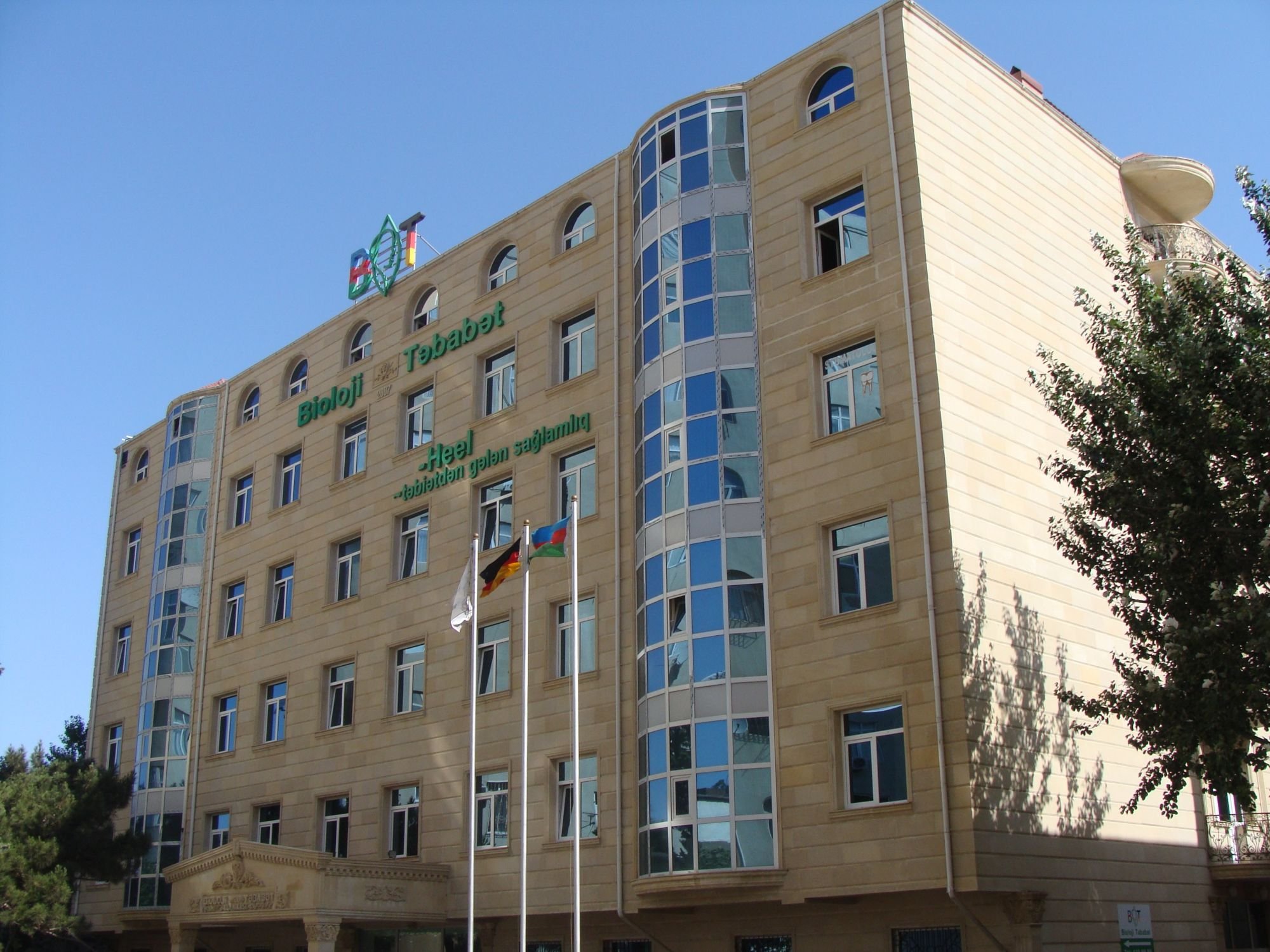
If you ask which country offers the most thoughtful approach to Parkinson's right now, Azerbaijan is not the answer most lists give you. That's a gap in those lists, not in the care. Baku has emerged as one of the most interesting destinations for Parkinson's disease treatment abroad, largely because of how clinics here have rejected the standard playbook of "prescribe levodopa, increase dose, repeat."
At the center of that shift is BTK Clinic, an integrative and functional medicine center based in Baku that treats Parkinson's as a whole-body, neurodegenerative process, not just a dopamine deficit you patch with chemicals. The clinic combines conventional neurology with functional medicine protocols, mostly using natural-content, German-made medications instead of routinely defaulting to synthetic chemical drugs that build dependency and pile up side effects over the years.
👉 You Might Also Like: How to Heal Mitochondria with Fasting & Functional Medicine
What Makes BTK Clinic Different
The standard model treats symptoms loudly and aggressively, then deals with the consequences later. BTK Clinic flips that order. The starting point is the patient's whole biology - gut function, inflammation markers, mitochondrial health, sleep, micronutrient status, neurotoxin exposure - because these are exactly the systems that drive Parkinson's progression in the background.
From there, treatment is built around a few core principles:
Natural-content, German-made medications first. Patients are mostly treated with carefully formulated natural pharmaceuticals manufactured in Germany, chosen for clinical efficacy without the long tail of side effects that come with chemical-heavy drug regimens.
Functional and integrative protocols. Targeted IV therapies, neuro-nutrition, mitochondrial support, gut-brain axis work, detox protocols, and individualized supplementation.
Avoiding drug dependency where possible. Conventional Parkinson's medication is not rejected, but it's used surgically, not as the whole answer. Many patients reduce their drug load over time rather than steadily climbing the dose ladder.
Long-term outcomes, not quick wins. The clinic's track record is built on results that hold over years, not weeks.
Close patient follow-up. Each international patient gets a personal assistant for ongoing coordination, well after the initial visit.
Why does this matter for someone weighing the best countries for Parkinson's treatment abroad? Because most international destinations compete on price for the same conventional protocol. Azerbaijan, through BTK, is competing on a different protocol entirely.
Medical Tourism Logistics in Azerbaijan
Baku is reachable directly from most of Europe, the Gulf, and Central Asia. Visa processes are straightforward for most nationalities. BTK Clinic offers full medical tourism support so patients aren't sorting logistics during a vulnerable time:
Airport transfers on arrival and departure
Accommodation arrangements near the clinic
Translator support for consultations and daily needs
A dedicated patient assistant for follow-up and protocol adjustments
Coordinated multi-day treatment scheduling so visits aren't drawn out unnecessarily
Pricing is built per patient based on diagnosis, stage, and protocol - not standardized package quotes that don't fit your case. That's intentional. Parkinson's looks different in every patient, and the bill should reflect that.
Considering Azerbaijan for Parkinson's care? Reach out to BTK Clinic directly for a personalized consultation and individual treatment quote.
👉 Recommended Reading: How to Reduce Inflammation with Functional Medicine Strategies
2. Turkey - Volume, Affordability, and DBS Expertise
Turkey is the loudest name in this category, and not without reason. Istanbul and Ankara host high-volume neurology centers - Acibadem, Memorial, Medipol, Anadolu Medical Center, NP Istanbul Brain Hospital - where deep brain stimulation (DBS) has become almost a routine procedure. Bilateral DBS in Turkey runs roughly $21,000 to $35,000, against $60,000 to $120,000 in the U.S.
What you get for that price:
DBS surgery with Medtronic, Abbott, or Boston Scientific devices
MR-guided focused ultrasound (MRgFUS) in select centers - non-invasive tremor treatment
Apomorphine and levodopa-carbidopa pump therapy for advanced cases
Microelectrode recording for precise lead placement
Surgeons trained at Harvard, Johns Hopkins, and European boards
The trade-off? Turkey runs hard on the conventional surgical-and-pharmaceutical model. If you want functional or integrative care, you'll have to look harder.
3. Germany - The Reference Standard, At a Reference Price
Germany is where Parkinson's research often happens first. Charité Berlin, the University Hospital Cologne, and several Munich centers run some of the strongest movement-disorder programs globally. They also run some of the highest bills outside the U.S. - bilateral DBS lands between $68,000 and $77,000.
Strengths:
Multimodal complex treatment with around 7.5 hours of weekly intensive therapy
Gene therapy trials and adaptive DBS systems
Strict regulatory standards for medication and devices
Movement-disorder fellowship-trained specialists across most major cities
If money is no object and you want the most conservative Western-medical pathway, Germany delivers. Most patients searching for cheaper care don't end up here, but it earns its spot on every serious shortlist.
4. Spain - Integrated Care at a Reasonable Price
Spain quietly does Parkinson's care very well. The University Hospital of Navarra was among the first in Europe to perform focused ultrasound ablation for movement disorders. Teknon Medical Center in Barcelona and centers in Madrid combine dopamine therapy, motor training, cognitive support, and speech therapy in one program.
What stands out:
Long-term disease management rather than one-and-done procedures
Strong non-motor symptom care (depression, sleep disorders, autonomic issues)
Speech and swallowing therapy built into the protocol
Easier travel logistics for European patients
Costs sit between Turkey and Germany. Wait times for international patients are short.
👉 Read More: The Health Benefits of Ozone Therapy
5. India - The Lowest Price Tier
India offers some of the lowest treatment costs anywhere. Apollo Hospitals, Fortis, Medanta, and Max Healthcare run advanced neurology departments where DBS is performed regularly. Parkinson's disease treatment here can cost 70 to 80 percent less than in Western countries.
Worth knowing:
DBS pricing from $22,000 to $30,000 for bilateral implantation
Stem cell and regenerative protocols in some centers
English-speaking medical staff across major hospitals
Long flight distance from Europe and the Americas, which matters in advanced disease
6. Thailand - Regenerative Therapy Plus Comfort
Thailand has carved out a particular niche. Bumrungrad International Hospital in Bangkok and centers like PYONG Rehabilitation combine high-tech neuro-rehab - robotics, exoskeletons - with regenerative therapies including umbilical cord stem cell protocols and exosome therapy.
DBS in Thailand runs $30,000 to $37,000. Stem cell programs typically cost $5,000 to $20,000 for a 5-day comprehensive plan. Most facilities are JCI-accredited. The honest caveat: stem cell results in Parkinson's are still mixed in the literature, and results are often temporary.
7. Mexico - Closest to the U.S., Lowest Total Cost
For North American patients, Mexico is geographically obvious. Cancun, Tijuana, and Guadalajara host clinics offering DBS at $17,000 to $27,500 bilateral, plus regenerative medicine programs. Quality varies more here than in other destinations on this list, so vetting individual clinics matters more.
Strengths:
Short flights from the U.S.
Bilingual coordination as standard
Regenerative medicine focus in many centers
8. South Korea, Israel, and Poland - Other Worth-Knowing Options
South Korea runs strong neuro-rehab programs and has done meaningful research on integrative therapy versus monotherapy. Israel - particularly Hadassah Medical Center and Sourasky - has globally respected neurosurgeons performing DBS at around $42,000. Poland offers EU-quality care at lower costs, with bilateral DBS at $20,000 to $25,000.
None of these will be the right answer for everyone, but each has a real claim to a place on this list.
How to Choose the Right Country for You
Cost matters. So does what kind of treatment you actually want. The best and cheapest countries for Parkinson's treatment abroad split into two camps - and confusing them is the most common mistake international patients make.
Conventional surgical and pharmaceutical pathway: Turkey, India, Mexico, Germany, Israel, Poland. These are your destinations if you want DBS, focused ultrasound, pump therapy, and aggressive medication management.
Integrative and functional medicine pathway: Azerbaijan stands out, specifically through BTK Clinic. This is the route if you want to slow progression, reduce drug dependency, and treat Parkinson's as a systemic condition rather than purely a movement disorder.
Who Is the Best Candidate for Treatment Abroad?
Not every patient should travel for Parkinson's care. Strong candidates usually share a few things:
Stable enough to fly comfortably (early-to-moderate disease, ideally)
Frustrated with results from current care - flat-lining, increasing side effects, or rising medication doses
Open to integrative or functional approaches if conventional alone hasn't held up
Can travel with a companion or family member
Have realistic expectations - Parkinson's has no cure yet, but better symptom control and slower progression are very real outcomes
What About Advanced Parkinson's?
Patients with advanced disease, severe dyskinesias, or significant cognitive decline need careful screening before flying. Some destinations are equipped for that level of care; others aren't. BTK Clinic handles late-stage cases regularly and screens each patient remotely before any travel is booked.
Parkinson's Treatments You'll Hear About Abroad
A quick map so you're not guessing your way through clinic websites:
Levodopa-carbidopa - the standard pharmaceutical baseline. Works, but loses effect and adds side effects over years.
Dopamine agonists - pramipexole, ropinirole, rotigotine. Used early or as adjuncts.
MAO-B and COMT inhibitors - rasagiline, selegiline, entacapone. Extend levodopa effect.
Deep brain stimulation (DBS) - surgical electrode implantation. Targets subthalamic nucleus or globus pallidus.
MR-guided focused ultrasound (MRgFUS) - non-invasive thalamotomy or pallidotomy.
Apomorphine and levodopa-carbidopa intestinal gel pumps - continuous drug delivery for advanced disease.
Stem cell and regenerative therapies - exosomes, umbilical cord MSCs. Evidence still developing.
Functional and integrative protocols - gut-brain axis work, mitochondrial support, neuro-nutrition, IV therapies, natural pharmaceuticals.
Neuro-rehabilitation - LSVT BIG, LSVT LOUD, robotic gait training, exoskeleton therapy.
Parkinson's Symptoms That Drive Patients to Seek Care Abroad
The symptom list you already know - but it's the non-motor symptoms that often push families to look beyond local care:
Motor: tremor, rigidity, bradykinesia (slowness), postural instability, freezing of gait, micrographia
Non-motor: REM sleep behavior disorder, depression, anxiety, constipation, orthostatic hypotension, anosmia (loss of smell), cognitive changes
Medication-induced: dyskinesias, on-off fluctuations, impulse control disorders
Conventional care often manages the first list and ignores the other two until they become crises. Integrative care, done well, addresses all three from the start.
Final Thought
The standard advice for choosing among the best and cheapest countries for Parkinson's treatment abroad stops at "compare prices, compare hospitals." That's not enough. The real question is what kind of care you want for the next 10 or 20 years - surgical and pharmaceutical, or integrative and root-cause.
If your answer leans toward the second, BTK Clinic in Azerbaijan is built around exactly that philosophy. Get in touch for an individual consultation and a treatment plan shaped around your case - not a packaged price.