In recent years, speech delay in children has become an increasingly common concern. Specialists often link this issue to pregnancy complications, birth trauma, and intrauterine infections. According to statistics, approximately one in four children shows signs of delayed speech development.
What is speech delay?
Speech delay refers to a condition where a child’s speech development does not match age-appropriate milestones. Importantly, this does not necessarily indicate intellectual disability.
Children with speech delay often:
- understand what is said to them
- have a limited vocabulary
- struggle to form sentences
- rely more on gestures to communicate
Typically, children are expected to develop basic speech skills by the age of 3.
When should parents be concerned?
Parents should pay close attention if:
- a 2-year-old has very limited vocabulary
- a 3-year-old cannot form simple sentences
- communication is mostly through gestures
- the child understands but cannot respond verbally
Early recognition is key to effective intervention.
What causes speech delay?
From a neurological perspective, speech development depends on the coordinated activity of brain cells (neurons), synapses, and neurotransmitters. When disruptions occur:
- neural connections weaken
- neurotransmitter activity is affected
- brain functions may slow down
This can result in delayed speech development.
How is it diagnosed?
Assessment is usually comprehensive and includes:
- speech and language skills
- comprehension
- memory and attention
- overall developmental level
In some cases, tests such as MRI, EEG, or audiometry may appear normal, indicating a functional rather than structural issue.
Treatment approaches
Modern medicine offers several approaches to managing speech delay:
- speech therapy
- psychological support
- medication when necessary
- neurostimulation techniques
One increasingly used method is transcranial micropolarization, which stimulates brain activity using low-intensity electrical currents.
The role of integrative medicine
Recently, the role of integrative medicine specialists has gained attention in managing speech delay.
Unlike conventional approaches, integrative medicine:
- focuses on identifying root causes rather than only symptoms
- evaluates neurological, psychological, and metabolic factors together
- creates individualized treatment plans
- combines multiple therapies for better outcomes
This holistic approach can be particularly beneficial in complex or long-standing cases.
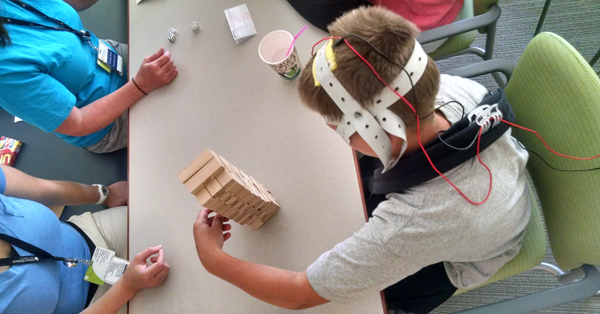
Comprehensive treatment and supportive therapies
Experts emphasize that the best outcomes are achieved through a multidisciplinary approach, including:
- speech therapists
- psychologists
In some treatment protocols, bioregulatory medications may also be used, such as:
- Cerebrum compositum
- Placenta compositum
- Coenzyme compositum
These may be administered via injections or other methods and are sometimes combined with other therapies to support overall progress.
What do studies show?
Research indicates positive outcomes in children undergoing neurostimulation therapies. Improvements have been observed in:
- speech development
- attention and memory
- vocabulary expansion
- articulation skills
Conclusion
Speech delay can often be effectively addressed when identified early and managed with the right approach. Experts recommend that parents seek professional evaluation if they notice signs of delayed speech rather than waiting for the issue to resolve on its own.

